
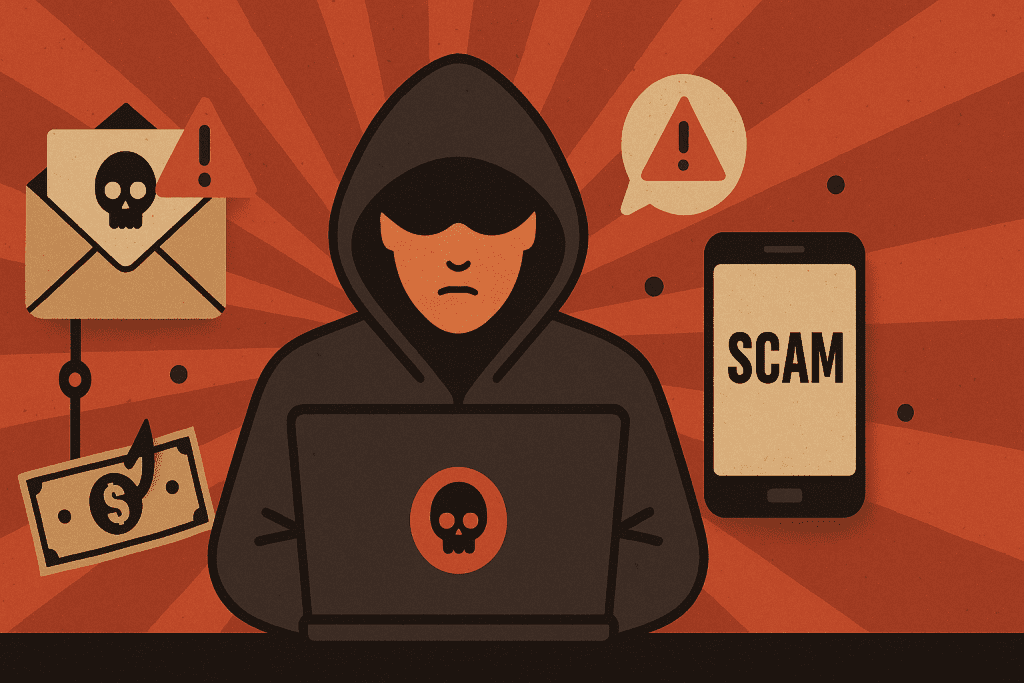
FBI Report: $262 Million Stolen in Account Takeover Scams in 2025

  • November 30, 2025

Scammer

The Federal Bureau of Investigation has released alarming statistics revealing that cybercriminals have stolen more than $262 million from American targets through sophisticated account takeover schemes in 2025 alone. This represents a coordinated assault on individuals, businesses, and organizations across multiple sectors, with attackers leveraging advanced social engineering techniques, artificial intelligence, and multi-stage attack frameworks to compromise financial accounts, payroll systems, and health savings accounts.

Understanding the Scale of the Threat

The magnitude of account takeover fraud in 2025 represents a significant escalation in cybercrime targeting financial systems. The FBI’s Internet Crime Complaint Center (IC3) has received over 5,100 complaints specifically related to account takeover incidents, indicating that the problem extends far beyond simple password breaches into sophisticated, coordinated campaigns designed to drain victim accounts rapidly and efficiently.

Metric 2025 Data (Year-to-Date) Average per Incident Estimated Annual Projection
Total Financial Losses $262,000,000 $51,373 $350-400 million
Reported Complaints 5,100+ N/A 6,800-7,500
Victim Categories Individuals, Businesses, Organizations N/A Multiple sectors affected
Primary Targets Financial accounts, Payroll systems, HSAs N/A Expanding to new platforms
Cryptocurrency Conversion Majority of stolen funds Varies Increasing trend
⚠️ Critical Context: The $262 million figure represents only reported losses. Cybersecurity experts estimate that actual losses may be 3-5 times higher, as many victims never file reports due to embarrassment, lack of awareness, or belief that recovery is impossible. This suggests the true financial impact could exceed $1 billion annually.

The Anatomy of Account Takeover Attacks

Modern account takeover schemes have evolved into sophisticated, multi-phase operations that exploit human psychology as much as technical vulnerabilities. Understanding the typical attack lifecycle helps organizations and individuals recognize warning signs before substantial damage occurs.

Phase 1: Credential Harvesting

The FBI identifies social engineering as the primary vector for initial credential compromise. Attackers employ various techniques to manipulate victims into voluntarily revealing sensitive information:

Attack Method Description Success Rate Primary Target
Phishing Emails Fraudulent emails impersonating legitimate institutions 15-30% Email users across all demographics
Vishing (Voice Phishing) Phone calls from fake customer service or tech support 20-35% Elderly and less tech-savvy users
Smishing (SMS Phishing) Text messages with malicious links or urgent requests 25-40% Mobile device users
Social Media Engineering Fake profiles and messages on social platforms 10-20% Social media active users
Fake Websites Spoofed login pages mimicking legitimate sites 30-45% Online banking and e-commerce users
Malicious Apps Trojanized mobile applications 5-15% Mobile users downloading from unofficial sources
📊 Industry Data: According to cybersecurity research, the average person receives approximately 3-5 phishing attempts per week. With AI-enhanced campaigns, the sophistication level has increased dramatically, making even security-conscious users vulnerable. Studies show that 30% of phishing emails are opened, and 12% of recipients click on malicious links.

Phase 2: Multi-Factor Authentication Bypass

One of the most concerning aspects of modern account takeover attacks is the ability of criminals to bypass multi-factor authentication (MFA) protections. The FBI specifically highlights this vulnerability in their warning:

“A cybercriminal manipulates the account owner into giving away their login credentials, including multi-factor authentication (MFA) code or One-Time Passcode (OTP), by impersonating a financial institution employee, customer support, or technical support personnel.”

Common MFA bypass techniques include:

  • Real-time phishing: Attackers create fake login pages that capture credentials and immediately use them on the legitimate site, prompting the real MFA code to be sent to the victim, who then provides it to the attacker
  • Social engineering for codes: Pretending to be technical support and convincing victims to read OTP codes aloud
  • SIM swapping: Compromising mobile phone numbers to intercept SMS-based authentication codes
  • MFA fatigue attacks: Bombarding users with repeated authentication requests until they approve one to stop the notifications
  • Session hijacking: Stealing active session tokens that bypass the need for authentication entirely

Phase 3: Account Control and Fund Transfer

Once attackers obtain credentials and bypass MFA, they move quickly to consolidate control and extract funds. The FBI describes the typical sequence:

  1. Log into legitimate financial institution website using stolen credentials
  2. Initiate password reset to lock out legitimate account owner
  3. Change security questions and contact information
  4. Wire funds to attacker-controlled accounts
  5. Convert funds to cryptocurrency to obscure the money trail
Phase Attacker Actions Typical Timeline Detection Difficulty
Initial Compromise Obtain credentials through phishing/social engineering Minutes to hours Low (victim unaware)
Access Validation Test credentials, bypass MFA 5-30 minutes Low (appears as normal login)
Account Lockout Change passwords, security questions, contact info 2-10 minutes Medium (may trigger alerts)
Fund Extraction Wire transfers, bill payments, purchases 10-60 minutes High (unusual transactions detected)
Money Laundering Convert to cryptocurrency, multiple transfers 1-24 hours Very High (cross-platform tracking required)
⚠️ Speed is Critical: The average time from initial account compromise to complete fund extraction is less than 2 hours. This narrow window makes rapid detection and response essential. Financial institutions report that 78% of successful account takeovers result in complete fund drainage before victims realize what has happened.

AI-Enhanced Phishing: The New Frontier

The integration of artificial intelligence into phishing campaigns represents a quantum leap in attack sophistication. Cybersecurity researchers have documented the rising deployment of AI tools to create convincing content that bypasses traditional detection systems and human skepticism.

How AI Transforms Phishing Campaigns

Artificial intelligence enables attackers to scale and personalize attacks in ways previously impossible:

AI Capability Application in Phishing Impact on Success Rate
Natural Language Generation Creating grammatically perfect, contextually appropriate messages in multiple languages +35% increase in click rates
Website Cloning Automatically generating pixel-perfect replicas of legitimate login pages +40% increase in credential submission
Social Media Scraping Gathering personal information to personalize attacks and answer security questions +50% increase in authentication bypass
Voice Synthesis Creating realistic voice calls impersonating trusted contacts or institutions +60% increase in vishing success
Image Generation Producing fake documents, logos, and verification materials +30% increase in trust establishment
Behavior Analysis Identifying optimal timing and messaging for individual targets +45% increase in response rates
📊 Research Findings: Cybersecurity companies report detecting AI-generated phishing content in approximately 60% of sophisticated campaigns analyzed in late 2024 and 2025. The quality has improved to the point where human reviewers can only distinguish AI-generated phishing from legitimate communications 52% of the time—barely better than random chance.

Holiday-Themed Scams: Seasonal Surge in Attacks

Fortinet FortiGuard Labs reported detecting over 750 malicious, holiday-themed domains in recent months, representing a coordinated exploitation of seasonal shopping behaviors. These campaigns specifically target users during high-traffic shopping periods when security vigilance typically decreases.

Holiday Scam Characteristics

Holiday Period Malicious Domains Detected Primary Lures Average Loss per Victim
Black Friday/Cyber Monday 280+ Limited-time deals, flash sales, doorbusters $1,200 – $3,500
Christmas Shopping 320+ Gift suggestions, last-minute deals, free shipping $800 – $2,400
New Year’s 85+ Resolution-related services, subscriptions, memberships $500 – $1,800
Valentine’s Day 65+ Gift deliveries, flower services, romantic getaways $400 – $1,200

Holiday-themed scams leverage urgency-driven messaging tied to specific events, significantly increasing the likelihood of credential theft. Common tactics include:

  • Countdown timers: Fake urgency claiming offers expire within minutes
  • Limited quantity claims: Messages suggesting high-demand items are nearly sold out
  • Exclusive access: Invitations to “VIP” or “early access” sales requiring immediate login
  • Shipping urgency: Warnings about order cutoff dates for holiday delivery
  • Account verification: Fake security alerts requiring immediate credential confirmation
⚠️ Seasonal Vulnerability: Studies show that users are 3-4 times more likely to click on phishing links during major shopping holidays compared to regular periods. The combination of time pressure, deal-seeking behavior, and increased transaction volume creates the perfect storm for credential theft. Retailers report that 40% of account compromises occur during the November-December holiday shopping season.

Mobile Phishing: The Growing Threat Vector

Mobile devices have become the primary attack surface for account takeover schemes. The FBI highlights that mobile phishing has increased substantially, with attackers exploiting trusted brand names to trick users into clicking malicious links or downloading compromised applications.

Why Mobile Devices Are Vulnerable

Vulnerability Factor Description Exploitation Method
Screen Size Limitations Small screens hide full URLs and security indicators Users cannot easily verify legitimacy of links
Always-Connected Constant internet connectivity and notification access Real-time attacks with immediate response expectations
App Ecosystem Millions of third-party applications with varying security Trojanized apps mimicking legitimate services
SMS/MMS Channels Text messaging lacks robust authentication Smishing campaigns appear to come from trusted numbers
Reduced Security Software Less comprehensive security solutions on mobile vs. desktop Malware detection rates lower on mobile platforms
Multitasking Behavior Users frequently switch between apps quickly Reduced scrutiny of messages and links
💡 Mobile Security Tip: Enable “Show URL Preview” features in mobile browsers and messaging apps. Many users don’t realize that long-pressing a link on mobile devices reveals the full destination URL without clicking. This simple habit can prevent countless credential theft attempts.

Brand Impersonation and Fake E-Commerce

Low-skill attackers can now deploy highly persuasive scams that mimic popular brands such as Amazon, Temu, Walmart, Target, and other major retailers. The FBI emphasizes that purchase scams are emerging as a significant threat, with fake e-commerce stores designed specifically to capture victim payment data.

Common Brand Impersonation Tactics

Brand Category Commonly Impersonated Attack Vector Data Captured
E-Commerce Amazon, eBay, Temu, Etsy Fake product listings, order confirmation phishing Payment cards, login credentials, addresses
Financial Services PayPal, Venmo, Cash App, Zelle Account verification emails, transaction alerts Banking credentials, SSN, security questions
Streaming Services Netflix, Spotify, Disney+, Hulu Subscription expiration notices, payment updates Credit cards, billing information
Technology Companies Apple, Microsoft, Google, Adobe Security alerts, license renewals, software updates Account credentials, payment methods
Shipping Carriers UPS, FedEx, USPS, DHL Delivery notifications, customs fees Credit cards, personal information

Fake E-Commerce Operation Models

Modern purchase scams employ sophisticated infrastructure that mimics legitimate retail operations:

  • Professional website design: AI-generated storefronts indistinguishable from legitimate retailers
  • Real-time inventory: Scraped product data from actual retailers to appear current and genuine
  • Competitive pricing: Slight discounts (10-20% below retail) that seem realistic but attractive
  • Customer reviews: AI-generated or stolen reviews creating false trust
  • Multiple payment options: Accepting various payment methods to appear legitimate
  • Order tracking systems: Fake tracking numbers and shipping updates to delay complaints
⚠️ Sequential Fraud Attempts: The FBI reports that certain campaigns attempt multiple fraudulent transactions in rapid succession to maximize stolen card value. After capturing payment information through fake purchases, attackers immediately test the cards with small transactions before executing larger fraudulent charges. Victims may see 5-10 unauthorized charges within the first hour after entering payment details on a fake site.

Platform Vulnerabilities Under Active Exploitation

Threat actors continue to exploit vulnerabilities in common platforms that businesses rely on for e-commerce and enterprise operations. The FBI identifies several platforms experiencing active exploitation:

Platform Primary Use Known Vulnerabilities Attack Impact
Adobe Commerce (Magento) E-commerce platform Payment skimming, admin panel access, customer data theft Hundreds of thousands of payment cards stolen
WooCommerce WordPress e-commerce plugin Plugin vulnerabilities, payment gateway interception Small to medium business breaches
Oracle E-Business Suite Enterprise resource planning Authentication bypass, unauthorized access to financial systems Large-scale corporate account takeovers
Microsoft 365 Business productivity suite OAuth token theft, email account compromise Business email compromise, payroll redirection
Salesforce CRM platform API misconfigurations, credential stuffing Customer data exposure, sales fraud

Multi-Stage Attack Funnels

Sophisticated attackers employ multi-stage funnels using traffic distribution systems (TDS) to determine the most vulnerable targets before redirecting them to final scam sites. This approach maximizes efficiency by filtering out security researchers, bots, and vigilant users while focusing resources on likely victims.

How Traffic Distribution Systems Work

Modern TDS platforms analyze visitors in real-time based on multiple factors:

  1. Geographic location: Targeting specific countries or regions with higher success rates
  2. Device fingerprinting: Identifying device type, operating system, and browser configuration
  3. Behavioral analysis: Monitoring mouse movements, scroll patterns, and interaction speed
  4. Network characteristics: Detecting VPNs, Tor usage, or corporate networks
  5. Referral source: Determining how the visitor arrived at the site
  6. Historical data: Checking if the IP address has previous fraud indicators

Based on this analysis, the TDS routes visitors to different destinations:

  • High-value targets: Redirected to sophisticated phishing pages designed to capture credentials and payment data
  • Medium-value targets: Shown aggressive advertising or less sophisticated scams
  • Low-value/suspicious visitors: Presented with legitimate-looking content or benign landing pages
📊 TDS Effectiveness: Security researchers analyzing TDS platforms found that sophisticated systems correctly identify and filter out security professionals and automated analysis tools approximately 85% of the time. This allows attack infrastructure to remain operational significantly longer by hiding malicious behavior from researchers attempting to document and disrupt campaigns.

Dark Web Marketplace Economics

Stolen payment cards and account credentials fuel a thriving underground economy. Cybercriminals advertise compromised payment information on dark web marketplaces, funding further campaigns that compromise additional accounts in a self-perpetuating cycle of fraud.

Stolen Data Type Average Dark Web Price Typical Buyer Use Case Estimated Market Size
Credit Card (US, with CVV) $15 – $45 Fraudulent purchases, card testing $500M+ annually
Bank Account Login $50 – $500 Fund transfers, account takeover $200M+ annually
PayPal Account $40 – $300 Money transfers, purchase fraud $150M+ annually
Email + Password Combo $2 – $15 Account takeover, password reuse attacks $100M+ annually
Corporate VPN Access $500 – $5,000 Network infiltration, ransomware deployment $300M+ annually
Full Identity Package $100 – $1,000 Identity theft, loan fraud, account creation $400M+ annually
⚠️ Self-Perpetuating Cycle: The economics of stolen data markets create a reinforcing cycle. Initial account takeovers generate funds that finance more sophisticated attacks, which compromise more accounts, which produce more stolen data for sale. This cycle means that a single successful breach can cascade into hundreds of additional victims as proceeds fund subsequent campaigns.

FBI Recommendations for Protection

The FBI has issued comprehensive recommendations for individuals and organizations to protect against account takeover attacks. These guidelines form the foundation of a defense-in-depth approach that layers multiple security controls.

Essential Security Measures

Protection Measure Implementation Difficulty Effectiveness Rating Cost
Unique, Complex Passwords Medium 90% ✓ Free (password manager: $3-10/month)
Multi-Factor Authentication Low to Medium 95% ✓ Free to $5/month
Limit Personal Info Sharing Easy 70% ✓ Free
Account Monitoring Easy 85% ✓ Free
URL Verification Easy 80% ✓ Free
Antivirus Software Easy 75% ✓ $30-80/year
Firewall Protection Easy to Medium 70% ✓ Free (built-in) or $50-200/year
Identity Theft Protection Easy 65% ✓ $10-30/month

Detailed Protection Strategies

1. Limit Personal Information Shared Online

The FBI emphasizes that oversharing personal information provides attackers with ammunition for social engineering and security question bypass. Critical information to protect includes:

  • Pet names (commonly used as password hints)
  • Schools attended (security question answers)
  • Date of birth (used for identity verification)
  • Family member names (security questions and social engineering)
  • Vacation schedules (physical security risks)
  • Home address and phone numbers
  • Maiden names and childhood information
💡 Social Media Privacy: Review privacy settings on all social media platforms quarterly. Approximately 85% of social media users have default privacy settings that expose far more information than necessary. Limit post visibility to friends only, disable location tagging, and never post real-time vacation photos (wait until after returning home).

2. Monitor Financial Accounts for Unusual Activity

Early detection dramatically improves recovery chances. Financial institutions typically provide fraud protection, but only if fraud is reported promptly (usually within 60 days).

Monitoring best practices:

  • Enable transaction alerts for all amounts (not just large purchases)
  • Review statements weekly, not just at month-end
  • Set up account balance notifications for unexpected changes
  • Monitor credit reports quarterly through AnnualCreditReport.com
  • Use financial aggregation apps to see all accounts in one place
  • Immediately report any unrecognized transactions, no matter how small

3. Use Unique, Complex Passwords for All Accounts

Password reuse remains one of the most significant security vulnerabilities. When one account is compromised, attackers immediately test those credentials across hundreds of other sites and services.

Password best practices:

  • Length matters most: Aim for 16+ characters when possible
  • Use a password manager: Tools like 1Password, Bitwarden, or LastPass generate and store unique passwords
  • Enable password breach monitoring: Services that alert you when credentials appear in data breaches
  • Avoid personal information: Don’t use names, birthdates, or dictionary words
  • Consider passphrases: Multiple random words are both secure and memorable

4. Verify URLs Before Logging Into Websites

Phishing sites often use confusingly similar domain names designed to deceive quick readers. Train yourself to carefully examine URLs:

Legitimate URL Phishing Variations Deception Technique
paypal.com paypa1.com, paypaI.com (capital i), paypai.com Character substitution
amazon.com amazon-security.com, amazon.verification.net Subdomain deception
bankofamerica.com bankofamerica-verify.com, secure-bankofamerica.com Prefix/suffix addition
microsoft.com mlcrosoft.com, microsoft-support.net Visual similarity

5. Be Cautious of Unsolicited Messages

Legitimate financial institutions will never call, email, or text requesting sensitive information. Establish a personal policy: if contacted unexpectedly, hang up and call the institution directly using a number from their official website or your account statement.

6. Deploy Comprehensive Security Software

Antivirus software, firewalls, and identity theft protection services provide overlapping layers of defense. While no single solution is perfect, comprehensive coverage dramatically reduces successful attack rates.

Advanced Protection Strategies

Beyond the FBI’s baseline recommendations, cybersecurity professionals recommend additional measures for high-value targets or security-conscious individuals:

Advanced Strategy Description Target Users
Hardware Security Keys Physical devices (YubiKey, Titan Key) for unphishable MFA High-value accounts, business executives
Virtual Credit Cards Single-use or merchant-specific card numbers Frequent online shoppers
Dedicated Email Addresses Separate emails for financial, shopping, and social accounts Privacy-conscious users
VPN Usage Encrypted internet connections protecting against surveillance Public Wi-Fi users, travelers
DNS Filtering Blocking access to known malicious domains at network level Families, small businesses
Account Freeze Services Temporarily restricting credit report access Identity theft prevention

Organizational Defense Strategies

Businesses face additional challenges and must implement enterprise-grade protections to safeguard employee and customer accounts:

Essential Business Controls

  1. Security Awareness Training: Quarterly training programs covering current threat landscapes, with simulated phishing exercises to test employee vigilance
  2. Email Security Gateways: Advanced filtering systems that analyze message content, sender reputation, and embedded links before delivery
  3. Endpoint Detection and Response (EDR): Continuous monitoring of all company devices for suspicious behavior and automated threat response
  4. Privileged Access Management: Strict controls and monitoring for accounts with elevated system permissions
  5. Fraud Detection Systems: Real-time transaction monitoring using machine learning to identify unusual patterns
  6. Incident Response Plans: Documented procedures for responding to account compromises, including communication protocols and recovery processes

The Role of Financial Institutions

Banks and financial service providers bear significant responsibility for protecting customer accounts. Leading institutions have implemented:

  • Behavioral biometrics: Analyzing typing patterns, mouse movements, and device handling to detect account takeovers
  • Velocity checks: Flagging unusual transaction patterns such as rapid-fire login attempts or geographic inconsistencies
  • Out-of-band verification: Confirming high-value transactions through separate communication channels
  • Transaction delays: Building in cooling-off periods for first-time payees or unusually large transfers
  • Customer education: Proactive communication about current scam trends and protection measures

Recovery After Account Compromise

If you discover your account has been compromised, immediate action is critical to minimize losses:

Immediate Response Checklist

Action Timeframe Priority
Contact financial institution fraud department Immediately CRITICAL
Change passwords on compromised account Within 5 minutes CRITICAL
Enable or reset MFA settings Within 10 minutes CRITICAL
Review and change security questions Within 30 minutes HIGH
Check other accounts for compromise Within 1 hour HIGH
File police report Within 24 hours MEDIUM
Report to FBI IC3 (ic3.gov) Within 48 hours MEDIUM
Place fraud alerts with credit bureaus Within 72 hours MEDIUM
Document all fraudulent transactions Ongoing HIGH

Looking Forward: Emerging Trends

The FBI’s report represents a snapshot of current threats, but the landscape continues evolving. Security researchers identify several emerging trends that will shape the account takeover threat environment in coming months:

📊 Trend Analysis:

  • Deepfake voice calls: Increased use of AI-generated voice synthesis to impersonate trusted contacts in vishing attacks
  • Automated social engineering: Chatbots conducting real-time conversations with victims to extract credentials
  • Cryptocurrency targeting: Growing focus on digital wallet takeovers as cryptocurrency adoption increases
  • Supply chain exploitation: Attacks targeting third-party service providers to gain access to customer accounts
  • Account aggregation services: Exploitation of financial management apps with broad account access

Conclusion

The FBI’s report of $262 million stolen through account takeover schemes in 2025 represents both a wake-up call and a roadmap for defense. While the threat landscape grows increasingly sophisticated—with AI-enhanced phishing, holiday-themed scams, mobile exploitation, and multi-stage attack funnels—comprehensive protection remains achievable through layered security measures and heightened vigilance.

The convergence of advanced technology and proven social engineering creates an environment where no individual or organization can afford complacency. Attackers have industrialized cybercrime, creating efficient operations that scale from targeting individual consumers to compromising enterprise systems. The speed at which modern attacks unfold—often completing fund extraction within two hours of initial compromise—demands proactive rather than reactive security postures.

Yet the FBI’s recommendations demonstrate that fundamental security hygiene remains highly effective. Unique, complex passwords managed through dedicated tools; multi-factor authentication deployed universally; cautious verification of unexpected communications; regular account monitoring; and comprehensive security software create formidable obstacles for attackers. When implemented consistently, these measures prevent the vast majority of account takeover attempts.

For organizations, the imperative extends beyond technology to culture. Security awareness training, regular phishing simulations, and clear incident response procedures transform employees from vulnerabilities into active defenders. Financial institutions must continue innovating with behavioral analytics, transaction monitoring, and customer education while regulatory frameworks evolve to match the threat environment.

As we move forward, the arms race between attackers and defenders will intensify. AI capabilities that criminals currently exploit to create sophisticated phishing campaigns will be matched by AI-powered defensive systems detecting anomalous behavior and suspicious patterns. The question is not whether account takeover attempts will continue—they undoubtedly will—but whether individuals and organizations will implement sufficient protections before becoming victims.

The $262 million stolen represents thousands of individual tragedies: retirement savings drained, business operations disrupted, personal financial security shattered. Yet each loss reinforces the urgent need for proactive defense. By understanding attack methods, implementing FBI recommendations, and maintaining constant vigilance, we can collectively reduce the success rate of these schemes and make account takeover attempts significantly less profitable for criminals.

⚠️ Final Reminder: Account security is not a one-time task but an ongoing commitment. Review your security measures quarterly, stay informed about emerging threats, and never assume that “it won’t happen to me.” In today’s interconnected digital economy, everyone is a potential target. The difference between victims and survivors lies not in luck but in preparation, awareness, and consistent application of security best practices.

If you have been a victim of account takeover or suspect fraudulent activity, report it immediately to your financial institution, file a complaint with the FBI’s Internet Crime Complaint Center at ic3.gov, and contact your local law enforcement. Early reporting increases recovery chances and helps authorities track and disrupt criminal operations.
FBI Report: $262 Million Stolen in Account Takeover Scams in 2025 – SafetyBis

FBI Report: $262 Million Stolen in Account Takeover Scams in 2025

  • November 30, 2025

Scammer

The Federal Bureau of Investigation has released alarming statistics revealing that cybercriminals have stolen more than $262 million from American targets through sophisticated account takeover schemes in 2025 alone. This represents a coordinated assault on individuals, businesses, and organizations across multiple sectors, with attackers leveraging advanced social engineering techniques, artificial intelligence, and multi-stage attack frameworks to compromise financial accounts, payroll systems, and health savings accounts.

Understanding the Scale of the Threat

The magnitude of account takeover fraud in 2025 represents a significant escalation in cybercrime targeting financial systems. The FBI’s Internet Crime Complaint Center (IC3) has received over 5,100 complaints specifically related to account takeover incidents, indicating that the problem extends far beyond simple password breaches into sophisticated, coordinated campaigns designed to drain victim accounts rapidly and efficiently.

Metric 2025 Data (Year-to-Date) Average per Incident Estimated Annual Projection
Total Financial Losses $262,000,000 $51,373 $350-400 million
Reported Complaints 5,100+ N/A 6,800-7,500
Victim Categories Individuals, Businesses, Organizations N/A Multiple sectors affected
Primary Targets Financial accounts, Payroll systems, HSAs N/A Expanding to new platforms
Cryptocurrency Conversion Majority of stolen funds Varies Increasing trend
⚠️ Critical Context: The $262 million figure represents only reported losses. Cybersecurity experts estimate that actual losses may be 3-5 times higher, as many victims never file reports due to embarrassment, lack of awareness, or belief that recovery is impossible. This suggests the true financial impact could exceed $1 billion annually.

The Anatomy of Account Takeover Attacks

Modern account takeover schemes have evolved into sophisticated, multi-phase operations that exploit human psychology as much as technical vulnerabilities. Understanding the typical attack lifecycle helps organizations and individuals recognize warning signs before substantial damage occurs.

Phase 1: Credential Harvesting

The FBI identifies social engineering as the primary vector for initial credential compromise. Attackers employ various techniques to manipulate victims into voluntarily revealing sensitive information:

Attack Method Description Success Rate Primary Target
Phishing Emails Fraudulent emails impersonating legitimate institutions 15-30% Email users across all demographics
Vishing (Voice Phishing) Phone calls from fake customer service or tech support 20-35% Elderly and less tech-savvy users
Smishing (SMS Phishing) Text messages with malicious links or urgent requests 25-40% Mobile device users
Social Media Engineering Fake profiles and messages on social platforms 10-20% Social media active users
Fake Websites Spoofed login pages mimicking legitimate sites 30-45% Online banking and e-commerce users
Malicious Apps Trojanized mobile applications 5-15% Mobile users downloading from unofficial sources
📊 Industry Data: According to cybersecurity research, the average person receives approximately 3-5 phishing attempts per week. With AI-enhanced campaigns, the sophistication level has increased dramatically, making even security-conscious users vulnerable. Studies show that 30% of phishing emails are opened, and 12% of recipients click on malicious links.

Phase 2: Multi-Factor Authentication Bypass

One of the most concerning aspects of modern account takeover attacks is the ability of criminals to bypass multi-factor authentication (MFA) protections. The FBI specifically highlights this vulnerability in their warning:

“A cybercriminal manipulates the account owner into giving away their login credentials, including multi-factor authentication (MFA) code or One-Time Passcode (OTP), by impersonating a financial institution employee, customer support, or technical support personnel.”

Common MFA bypass techniques include:

  • Real-time phishing: Attackers create fake login pages that capture credentials and immediately use them on the legitimate site, prompting the real MFA code to be sent to the victim, who then provides it to the attacker
  • Social engineering for codes: Pretending to be technical support and convincing victims to read OTP codes aloud
  • SIM swapping: Compromising mobile phone numbers to intercept SMS-based authentication codes
  • MFA fatigue attacks: Bombarding users with repeated authentication requests until they approve one to stop the notifications
  • Session hijacking: Stealing active session tokens that bypass the need for authentication entirely

Phase 3: Account Control and Fund Transfer

Once attackers obtain credentials and bypass MFA, they move quickly to consolidate control and extract funds. The FBI describes the typical sequence:

  1. Log into legitimate financial institution website using stolen credentials
  2. Initiate password reset to lock out legitimate account owner
  3. Change security questions and contact information
  4. Wire funds to attacker-controlled accounts
  5. Convert funds to cryptocurrency to obscure the money trail
Phase Attacker Actions Typical Timeline Detection Difficulty
Initial Compromise Obtain credentials through phishing/social engineering Minutes to hours Low (victim unaware)
Access Validation Test credentials, bypass MFA 5-30 minutes Low (appears as normal login)
Account Lockout Change passwords, security questions, contact info 2-10 minutes Medium (may trigger alerts)
Fund Extraction Wire transfers, bill payments, purchases 10-60 minutes High (unusual transactions detected)
Money Laundering Convert to cryptocurrency, multiple transfers 1-24 hours Very High (cross-platform tracking required)
⚠️ Speed is Critical: The average time from initial account compromise to complete fund extraction is less than 2 hours. This narrow window makes rapid detection and response essential. Financial institutions report that 78% of successful account takeovers result in complete fund drainage before victims realize what has happened.

AI-Enhanced Phishing: The New Frontier

The integration of artificial intelligence into phishing campaigns represents a quantum leap in attack sophistication. Cybersecurity researchers have documented the rising deployment of AI tools to create convincing content that bypasses traditional detection systems and human skepticism.

How AI Transforms Phishing Campaigns

Artificial intelligence enables attackers to scale and personalize attacks in ways previously impossible:

AI Capability Application in Phishing Impact on Success Rate
Natural Language Generation Creating grammatically perfect, contextually appropriate messages in multiple languages +35% increase in click rates
Website Cloning Automatically generating pixel-perfect replicas of legitimate login pages +40% increase in credential submission
Social Media Scraping Gathering personal information to personalize attacks and answer security questions +50% increase in authentication bypass
Voice Synthesis Creating realistic voice calls impersonating trusted contacts or institutions +60% increase in vishing success
Image Generation Producing fake documents, logos, and verification materials +30% increase in trust establishment
Behavior Analysis Identifying optimal timing and messaging for individual targets +45% increase in response rates
📊 Research Findings: Cybersecurity companies report detecting AI-generated phishing content in approximately 60% of sophisticated campaigns analyzed in late 2024 and 2025. The quality has improved to the point where human reviewers can only distinguish AI-generated phishing from legitimate communications 52% of the time—barely better than random chance.

Holiday-Themed Scams: Seasonal Surge in Attacks

Fortinet FortiGuard Labs reported detecting over 750 malicious, holiday-themed domains in recent months, representing a coordinated exploitation of seasonal shopping behaviors. These campaigns specifically target users during high-traffic shopping periods when security vigilance typically decreases.

Holiday Scam Characteristics

Holiday Period Malicious Domains Detected Primary Lures Average Loss per Victim
Black Friday/Cyber Monday 280+ Limited-time deals, flash sales, doorbusters $1,200 – $3,500
Christmas Shopping 320+ Gift suggestions, last-minute deals, free shipping $800 – $2,400
New Year’s 85+ Resolution-related services, subscriptions, memberships $500 – $1,800
Valentine’s Day 65+ Gift deliveries, flower services, romantic getaways $400 – $1,200

Holiday-themed scams leverage urgency-driven messaging tied to specific events, significantly increasing the likelihood of credential theft. Common tactics include:

  • Countdown timers: Fake urgency claiming offers expire within minutes
  • Limited quantity claims: Messages suggesting high-demand items are nearly sold out
  • Exclusive access: Invitations to “VIP” or “early access” sales requiring immediate login
  • Shipping urgency: Warnings about order cutoff dates for holiday delivery
  • Account verification: Fake security alerts requiring immediate credential confirmation
⚠️ Seasonal Vulnerability: Studies show that users are 3-4 times more likely to click on phishing links during major shopping holidays compared to regular periods. The combination of time pressure, deal-seeking behavior, and increased transaction volume creates the perfect storm for credential theft. Retailers report that 40% of account compromises occur during the November-December holiday shopping season.

Mobile Phishing: The Growing Threat Vector

Mobile devices have become the primary attack surface for account takeover schemes. The FBI highlights that mobile phishing has increased substantially, with attackers exploiting trusted brand names to trick users into clicking malicious links or downloading compromised applications.

Why Mobile Devices Are Vulnerable

Vulnerability Factor Description Exploitation Method
Screen Size Limitations Small screens hide full URLs and security indicators Users cannot easily verify legitimacy of links
Always-Connected Constant internet connectivity and notification access Real-time attacks with immediate response expectations
App Ecosystem Millions of third-party applications with varying security Trojanized apps mimicking legitimate services
SMS/MMS Channels Text messaging lacks robust authentication Smishing campaigns appear to come from trusted numbers
Reduced Security Software Less comprehensive security solutions on mobile vs. desktop Malware detection rates lower on mobile platforms
Multitasking Behavior Users frequently switch between apps quickly Reduced scrutiny of messages and links
💡 Mobile Security Tip: Enable “Show URL Preview” features in mobile browsers and messaging apps. Many users don’t realize that long-pressing a link on mobile devices reveals the full destination URL without clicking. This simple habit can prevent countless credential theft attempts.

Brand Impersonation and Fake E-Commerce

Low-skill attackers can now deploy highly persuasive scams that mimic popular brands such as Amazon, Temu, Walmart, Target, and other major retailers. The FBI emphasizes that purchase scams are emerging as a significant threat, with fake e-commerce stores designed specifically to capture victim payment data.

Common Brand Impersonation Tactics

Brand Category Commonly Impersonated Attack Vector Data Captured
E-Commerce Amazon, eBay, Temu, Etsy Fake product listings, order confirmation phishing Payment cards, login credentials, addresses
Financial Services PayPal, Venmo, Cash App, Zelle Account verification emails, transaction alerts Banking credentials, SSN, security questions
Streaming Services Netflix, Spotify, Disney+, Hulu Subscription expiration notices, payment updates Credit cards, billing information
Technology Companies Apple, Microsoft, Google, Adobe Security alerts, license renewals, software updates Account credentials, payment methods
Shipping Carriers UPS, FedEx, USPS, DHL Delivery notifications, customs fees Credit cards, personal information

Fake E-Commerce Operation Models

Modern purchase scams employ sophisticated infrastructure that mimics legitimate retail operations:

  • Professional website design: AI-generated storefronts indistinguishable from legitimate retailers
  • Real-time inventory: Scraped product data from actual retailers to appear current and genuine
  • Competitive pricing: Slight discounts (10-20% below retail) that seem realistic but attractive
  • Customer reviews: AI-generated or stolen reviews creating false trust
  • Multiple payment options: Accepting various payment methods to appear legitimate
  • Order tracking systems: Fake tracking numbers and shipping updates to delay complaints
⚠️ Sequential Fraud Attempts: The FBI reports that certain campaigns attempt multiple fraudulent transactions in rapid succession to maximize stolen card value. After capturing payment information through fake purchases, attackers immediately test the cards with small transactions before executing larger fraudulent charges. Victims may see 5-10 unauthorized charges within the first hour after entering payment details on a fake site.

Platform Vulnerabilities Under Active Exploitation

Threat actors continue to exploit vulnerabilities in common platforms that businesses rely on for e-commerce and enterprise operations. The FBI identifies several platforms experiencing active exploitation:

Platform Primary Use Known Vulnerabilities Attack Impact
Adobe Commerce (Magento) E-commerce platform Payment skimming, admin panel access, customer data theft Hundreds of thousands of payment cards stolen
WooCommerce WordPress e-commerce plugin Plugin vulnerabilities, payment gateway interception Small to medium business breaches
Oracle E-Business Suite Enterprise resource planning Authentication bypass, unauthorized access to financial systems Large-scale corporate account takeovers
Microsoft 365 Business productivity suite OAuth token theft, email account compromise Business email compromise, payroll redirection
Salesforce CRM platform API misconfigurations, credential stuffing Customer data exposure, sales fraud

Multi-Stage Attack Funnels

Sophisticated attackers employ multi-stage funnels using traffic distribution systems (TDS) to determine the most vulnerable targets before redirecting them to final scam sites. This approach maximizes efficiency by filtering out security researchers, bots, and vigilant users while focusing resources on likely victims.

How Traffic Distribution Systems Work

Modern TDS platforms analyze visitors in real-time based on multiple factors:

  1. Geographic location: Targeting specific countries or regions with higher success rates
  2. Device fingerprinting: Identifying device type, operating system, and browser configuration
  3. Behavioral analysis: Monitoring mouse movements, scroll patterns, and interaction speed
  4. Network characteristics: Detecting VPNs, Tor usage, or corporate networks
  5. Referral source: Determining how the visitor arrived at the site
  6. Historical data: Checking if the IP address has previous fraud indicators

Based on this analysis, the TDS routes visitors to different destinations:

  • High-value targets: Redirected to sophisticated phishing pages designed to capture credentials and payment data
  • Medium-value targets: Shown aggressive advertising or less sophisticated scams
  • Low-value/suspicious visitors: Presented with legitimate-looking content or benign landing pages
📊 TDS Effectiveness: Security researchers analyzing TDS platforms found that sophisticated systems correctly identify and filter out security professionals and automated analysis tools approximately 85% of the time. This allows attack infrastructure to remain operational significantly longer by hiding malicious behavior from researchers attempting to document and disrupt campaigns.

Dark Web Marketplace Economics

Stolen payment cards and account credentials fuel a thriving underground economy. Cybercriminals advertise compromised payment information on dark web marketplaces, funding further campaigns that compromise additional accounts in a self-perpetuating cycle of fraud.

Stolen Data Type Average Dark Web Price Typical Buyer Use Case Estimated Market Size
Credit Card (US, with CVV) $15 – $45 Fraudulent purchases, card testing $500M+ annually
Bank Account Login $50 – $500 Fund transfers, account takeover $200M+ annually
PayPal Account $40 – $300 Money transfers, purchase fraud $150M+ annually
Email + Password Combo $2 – $15 Account takeover, password reuse attacks $100M+ annually
Corporate VPN Access $500 – $5,000 Network infiltration, ransomware deployment $300M+ annually
Full Identity Package $100 – $1,000 Identity theft, loan fraud, account creation $400M+ annually
⚠️ Self-Perpetuating Cycle: The economics of stolen data markets create a reinforcing cycle. Initial account takeovers generate funds that finance more sophisticated attacks, which compromise more accounts, which produce more stolen data for sale. This cycle means that a single successful breach can cascade into hundreds of additional victims as proceeds fund subsequent campaigns.

FBI Recommendations for Protection

The FBI has issued comprehensive recommendations for individuals and organizations to protect against account takeover attacks. These guidelines form the foundation of a defense-in-depth approach that layers multiple security controls.

Essential Security Measures

Protection Measure Implementation Difficulty Effectiveness Rating Cost
Unique, Complex Passwords Medium 90% ✓ Free (password manager: $3-10/month)
Multi-Factor Authentication Low to Medium 95% ✓ Free to $5/month
Limit Personal Info Sharing Easy 70% ✓ Free
Account Monitoring Easy 85% ✓ Free
URL Verification Easy 80% ✓ Free
Antivirus Software Easy 75% ✓ $30-80/year
Firewall Protection Easy to Medium 70% ✓ Free (built-in) or $50-200/year
Identity Theft Protection Easy 65% ✓ $10-30/month

Detailed Protection Strategies

1. Limit Personal Information Shared Online

The FBI emphasizes that oversharing personal information provides attackers with ammunition for social engineering and security question bypass. Critical information to protect includes:

  • Pet names (commonly used as password hints)
  • Schools attended (security question answers)
  • Date of birth (used for identity verification)
  • Family member names (security questions and social engineering)
  • Vacation schedules (physical security risks)
  • Home address and phone numbers
  • Maiden names and childhood information
💡 Social Media Privacy: Review privacy settings on all social media platforms quarterly. Approximately 85% of social media users have default privacy settings that expose far more information than necessary. Limit post visibility to friends only, disable location tagging, and never post real-time vacation photos (wait until after returning home).

2. Monitor Financial Accounts for Unusual Activity

Early detection dramatically improves recovery chances. Financial institutions typically provide fraud protection, but only if fraud is reported promptly (usually within 60 days).

Monitoring best practices:

  • Enable transaction alerts for all amounts (not just large purchases)
  • Review statements weekly, not just at month-end
  • Set up account balance notifications for unexpected changes
  • Monitor credit reports quarterly through AnnualCreditReport.com
  • Use financial aggregation apps to see all accounts in one place
  • Immediately report any unrecognized transactions, no matter how small

3. Use Unique, Complex Passwords for All Accounts

Password reuse remains one of the most significant security vulnerabilities. When one account is compromised, attackers immediately test those credentials across hundreds of other sites and services.

Password best practices:

  • Length matters most: Aim for 16+ characters when possible
  • Use a password manager: Tools like 1Password, Bitwarden, or LastPass generate and store unique passwords
  • Enable password breach monitoring: Services that alert you when credentials appear in data breaches
  • Avoid personal information: Don’t use names, birthdates, or dictionary words
  • Consider passphrases: Multiple random words are both secure and memorable

4. Verify URLs Before Logging Into Websites

Phishing sites often use confusingly similar domain names designed to deceive quick readers. Train yourself to carefully examine URLs:

Legitimate URL Phishing Variations Deception Technique
paypal.com paypa1.com, paypaI.com (capital i), paypai.com Character substitution
amazon.com amazon-security.com, amazon.verification.net Subdomain deception
bankofamerica.com bankofamerica-verify.com, secure-bankofamerica.com Prefix/suffix addition
microsoft.com mlcrosoft.com, microsoft-support.net Visual similarity

5. Be Cautious of Unsolicited Messages

Legitimate financial institutions will never call, email, or text requesting sensitive information. Establish a personal policy: if contacted unexpectedly, hang up and call the institution directly using a number from their official website or your account statement.

6. Deploy Comprehensive Security Software

Antivirus software, firewalls, and identity theft protection services provide overlapping layers of defense. While no single solution is perfect, comprehensive coverage dramatically reduces successful attack rates.

Advanced Protection Strategies

Beyond the FBI’s baseline recommendations, cybersecurity professionals recommend additional measures for high-value targets or security-conscious individuals:

Advanced Strategy Description Target Users
Hardware Security Keys Physical devices (YubiKey, Titan Key) for unphishable MFA High-value accounts, business executives
Virtual Credit Cards Single-use or merchant-specific card numbers Frequent online shoppers
Dedicated Email Addresses Separate emails for financial, shopping, and social accounts Privacy-conscious users
VPN Usage Encrypted internet connections protecting against surveillance Public Wi-Fi users, travelers
DNS Filtering Blocking access to known malicious domains at network level Families, small businesses
Account Freeze Services Temporarily restricting credit report access Identity theft prevention

Organizational Defense Strategies

Businesses face additional challenges and must implement enterprise-grade protections to safeguard employee and customer accounts:

Essential Business Controls

  1. Security Awareness Training: Quarterly training programs covering current threat landscapes, with simulated phishing exercises to test employee vigilance
  2. Email Security Gateways: Advanced filtering systems that analyze message content, sender reputation, and embedded links before delivery
  3. Endpoint Detection and Response (EDR): Continuous monitoring of all company devices for suspicious behavior and automated threat response
  4. Privileged Access Management: Strict controls and monitoring for accounts with elevated system permissions
  5. Fraud Detection Systems: Real-time transaction monitoring using machine learning to identify unusual patterns
  6. Incident Response Plans: Documented procedures for responding to account compromises, including communication protocols and recovery processes

The Role of Financial Institutions

Banks and financial service providers bear significant responsibility for protecting customer accounts. Leading institutions have implemented:

  • Behavioral biometrics: Analyzing typing patterns, mouse movements, and device handling to detect account takeovers
  • Velocity checks: Flagging unusual transaction patterns such as rapid-fire login attempts or geographic inconsistencies
  • Out-of-band verification: Confirming high-value transactions through separate communication channels
  • Transaction delays: Building in cooling-off periods for first-time payees or unusually large transfers
  • Customer education: Proactive communication about current scam trends and protection measures

Recovery After Account Compromise

If you discover your account has been compromised, immediate action is critical to minimize losses:

Immediate Response Checklist

Action Timeframe Priority
Contact financial institution fraud department Immediately CRITICAL
Change passwords on compromised account Within 5 minutes CRITICAL
Enable or reset MFA settings Within 10 minutes CRITICAL
Review and change security questions Within 30 minutes HIGH
Check other accounts for compromise Within 1 hour HIGH
File police report Within 24 hours MEDIUM
Report to FBI IC3 (ic3.gov) Within 48 hours MEDIUM
Place fraud alerts with credit bureaus Within 72 hours MEDIUM
Document all fraudulent transactions Ongoing HIGH

Looking Forward: Emerging Trends

The FBI’s report represents a snapshot of current threats, but the landscape continues evolving. Security researchers identify several emerging trends that will shape the account takeover threat environment in coming months:

📊 Trend Analysis:

  • Deepfake voice calls: Increased use of AI-generated voice synthesis to impersonate trusted contacts in vishing attacks
  • Automated social engineering: Chatbots conducting real-time conversations with victims to extract credentials
  • Cryptocurrency targeting: Growing focus on digital wallet takeovers as cryptocurrency adoption increases
  • Supply chain exploitation: Attacks targeting third-party service providers to gain access to customer accounts
  • Account aggregation services: Exploitation of financial management apps with broad account access

Conclusion

The FBI’s report of $262 million stolen through account takeover schemes in 2025 represents both a wake-up call and a roadmap for defense. While the threat landscape grows increasingly sophisticated—with AI-enhanced phishing, holiday-themed scams, mobile exploitation, and multi-stage attack funnels—comprehensive protection remains achievable through layered security measures and heightened vigilance.

The convergence of advanced technology and proven social engineering creates an environment where no individual or organization can afford complacency. Attackers have industrialized cybercrime, creating efficient operations that scale from targeting individual consumers to compromising enterprise systems. The speed at which modern attacks unfold—often completing fund extraction within two hours of initial compromise—demands proactive rather than reactive security postures.

Yet the FBI’s recommendations demonstrate that fundamental security hygiene remains highly effective. Unique, complex passwords managed through dedicated tools; multi-factor authentication deployed universally; cautious verification of unexpected communications; regular account monitoring; and comprehensive security software create formidable obstacles for attackers. When implemented consistently, these measures prevent the vast majority of account takeover attempts.

For organizations, the imperative extends beyond technology to culture. Security awareness training, regular phishing simulations, and clear incident response procedures transform employees from vulnerabilities into active defenders. Financial institutions must continue innovating with behavioral analytics, transaction monitoring, and customer education while regulatory frameworks evolve to match the threat environment.

As we move forward, the arms race between attackers and defenders will intensify. AI capabilities that criminals currently exploit to create sophisticated phishing campaigns will be matched by AI-powered defensive systems detecting anomalous behavior and suspicious patterns. The question is not whether account takeover attempts will continue—they undoubtedly will—but whether individuals and organizations will implement sufficient protections before becoming victims.

The $262 million stolen represents thousands of individual tragedies: retirement savings drained, business operations disrupted, personal financial security shattered. Yet each loss reinforces the urgent need for proactive defense. By understanding attack methods, implementing FBI recommendations, and maintaining constant vigilance, we can collectively reduce the success rate of these schemes and make account takeover attempts significantly less profitable for criminals.

⚠️ Final Reminder: Account security is not a one-time task but an ongoing commitment. Review your security measures quarterly, stay informed about emerging threats, and never assume that “it won’t happen to me.” In today’s interconnected digital economy, everyone is a potential target. The difference between victims and survivors lies not in luck but in preparation, awareness, and consistent application of security best practices.

If you have been a victim of account takeover or suspect fraudulent activity, report it immediately to your financial institution, file a complaint with the FBI’s Internet Crime Complaint Center at ic3.gov, and contact your local law enforcement. Early reporting increases recovery chances and helps authorities track and disrupt criminal operations.

FBI Report: $262 Million Stolen in Account Takeover Scams in 2025 – SafetyBis

FBI Report: $262 Million Stolen in Account Takeover Scams in 2025

  • November 30, 2025

Scammer

The Federal Bureau of Investigation has released alarming statistics revealing that cybercriminals have stolen more than $262 million from American targets through sophisticated account takeover schemes in 2025 alone. This represents a coordinated assault on individuals, businesses, and organizations across multiple sectors, with attackers leveraging advanced social engineering techniques, artificial intelligence, and multi-stage attack frameworks to compromise financial accounts, payroll systems, and health savings accounts.

Understanding the Scale of the Threat

The magnitude of account takeover fraud in 2025 represents a significant escalation in cybercrime targeting financial systems. The FBI’s Internet Crime Complaint Center (IC3) has received over 5,100 complaints specifically related to account takeover incidents, indicating that the problem extends far beyond simple password breaches into sophisticated, coordinated campaigns designed to drain victim accounts rapidly and efficiently.

Metric 2025 Data (Year-to-Date) Average per Incident Estimated Annual Projection
Total Financial Losses $262,000,000 $51,373 $350-400 million
Reported Complaints 5,100+ N/A 6,800-7,500
Victim Categories Individuals, Businesses, Organizations N/A Multiple sectors affected
Primary Targets Financial accounts, Payroll systems, HSAs N/A Expanding to new platforms
Cryptocurrency Conversion Majority of stolen funds Varies Increasing trend
⚠️ Critical Context: The $262 million figure represents only reported losses. Cybersecurity experts estimate that actual losses may be 3-5 times higher, as many victims never file reports due to embarrassment, lack of awareness, or belief that recovery is impossible. This suggests the true financial impact could exceed $1 billion annually.

The Anatomy of Account Takeover Attacks

Modern account takeover schemes have evolved into sophisticated, multi-phase operations that exploit human psychology as much as technical vulnerabilities. Understanding the typical attack lifecycle helps organizations and individuals recognize warning signs before substantial damage occurs.

Phase 1: Credential Harvesting

The FBI identifies social engineering as the primary vector for initial credential compromise. Attackers employ various techniques to manipulate victims into voluntarily revealing sensitive information:

Attack Method Description Success Rate Primary Target
Phishing Emails Fraudulent emails impersonating legitimate institutions 15-30% Email users across all demographics
Vishing (Voice Phishing) Phone calls from fake customer service or tech support 20-35% Elderly and less tech-savvy users
Smishing (SMS Phishing) Text messages with malicious links or urgent requests 25-40% Mobile device users
Social Media Engineering Fake profiles and messages on social platforms 10-20% Social media active users
Fake Websites Spoofed login pages mimicking legitimate sites 30-45% Online banking and e-commerce users
Malicious Apps Trojanized mobile applications 5-15% Mobile users downloading from unofficial sources
📊 Industry Data: According to cybersecurity research, the average person receives approximately 3-5 phishing attempts per week. With AI-enhanced campaigns, the sophistication level has increased dramatically, making even security-conscious users vulnerable. Studies show that 30% of phishing emails are opened, and 12% of recipients click on malicious links.

Phase 2: Multi-Factor Authentication Bypass

One of the most concerning aspects of modern account takeover attacks is the ability of criminals to bypass multi-factor authentication (MFA) protections. The FBI specifically highlights this vulnerability in their warning:

“A cybercriminal manipulates the account owner into giving away their login credentials, including multi-factor authentication (MFA) code or One-Time Passcode (OTP), by impersonating a financial institution employee, customer support, or technical support personnel.”

Common MFA bypass techniques include:

  • Real-time phishing: Attackers create fake login pages that capture credentials and immediately use them on the legitimate site, prompting the real MFA code to be sent to the victim, who then provides it to the attacker
  • Social engineering for codes: Pretending to be technical support and convincing victims to read OTP codes aloud
  • SIM swapping: Compromising mobile phone numbers to intercept SMS-based authentication codes
  • MFA fatigue attacks: Bombarding users with repeated authentication requests until they approve one to stop the notifications
  • Session hijacking: Stealing active session tokens that bypass the need for authentication entirely

Phase 3: Account Control and Fund Transfer

Once attackers obtain credentials and bypass MFA, they move quickly to consolidate control and extract funds. The FBI describes the typical sequence:

  1. Log into legitimate financial institution website using stolen credentials
  2. Initiate password reset to lock out legitimate account owner
  3. Change security questions and contact information
  4. Wire funds to attacker-controlled accounts
  5. Convert funds to cryptocurrency to obscure the money trail
Phase Attacker Actions Typical Timeline Detection Difficulty
Initial Compromise Obtain credentials through phishing/social engineering Minutes to hours Low (victim unaware)
Access Validation Test credentials, bypass MFA 5-30 minutes Low (appears as normal login)
Account Lockout Change passwords, security questions, contact info 2-10 minutes Medium (may trigger alerts)
Fund Extraction Wire transfers, bill payments, purchases 10-60 minutes High (unusual transactions detected)
Money Laundering Convert to cryptocurrency, multiple transfers 1-24 hours Very High (cross-platform tracking required)
⚠️ Speed is Critical: The average time from initial account compromise to complete fund extraction is less than 2 hours. This narrow window makes rapid detection and response essential. Financial institutions report that 78% of successful account takeovers result in complete fund drainage before victims realize what has happened.

AI-Enhanced Phishing: The New Frontier

The integration of artificial intelligence into phishing campaigns represents a quantum leap in attack sophistication. Cybersecurity researchers have documented the rising deployment of AI tools to create convincing content that bypasses traditional detection systems and human skepticism.

How AI Transforms Phishing Campaigns

Artificial intelligence enables attackers to scale and personalize attacks in ways previously impossible:

AI Capability Application in Phishing Impact on Success Rate
Natural Language Generation Creating grammatically perfect, contextually appropriate messages in multiple languages +35% increase in click rates
Website Cloning Automatically generating pixel-perfect replicas of legitimate login pages +40% increase in credential submission
Social Media Scraping Gathering personal information to personalize attacks and answer security questions +50% increase in authentication bypass
Voice Synthesis Creating realistic voice calls impersonating trusted contacts or institutions +60% increase in vishing success
Image Generation Producing fake documents, logos, and verification materials +30% increase in trust establishment
Behavior Analysis Identifying optimal timing and messaging for individual targets +45% increase in response rates
📊 Research Findings: Cybersecurity companies report detecting AI-generated phishing content in approximately 60% of sophisticated campaigns analyzed in late 2024 and 2025. The quality has improved to the point where human reviewers can only distinguish AI-generated phishing from legitimate communications 52% of the time—barely better than random chance.

Holiday-Themed Scams: Seasonal Surge in Attacks

Fortinet FortiGuard Labs reported detecting over 750 malicious, holiday-themed domains in recent months, representing a coordinated exploitation of seasonal shopping behaviors. These campaigns specifically target users during high-traffic shopping periods when security vigilance typically decreases.

Holiday Scam Characteristics

Holiday Period Malicious Domains Detected Primary Lures Average Loss per Victim
Black Friday/Cyber Monday 280+ Limited-time deals, flash sales, doorbusters $1,200 – $3,500
Christmas Shopping 320+ Gift suggestions, last-minute deals, free shipping $800 – $2,400
New Year’s 85+ Resolution-related services, subscriptions, memberships $500 – $1,800
Valentine’s Day 65+ Gift deliveries, flower services, romantic getaways $400 – $1,200

Holiday-themed scams leverage urgency-driven messaging tied to specific events, significantly increasing the likelihood of credential theft. Common tactics include:

  • Countdown timers: Fake urgency claiming offers expire within minutes
  • Limited quantity claims: Messages suggesting high-demand items are nearly sold out
  • Exclusive access: Invitations to “VIP” or “early access” sales requiring immediate login
  • Shipping urgency: Warnings about order cutoff dates for holiday delivery
  • Account verification: Fake security alerts requiring immediate credential confirmation
⚠️ Seasonal Vulnerability: Studies show that users are 3-4 times more likely to click on phishing links during major shopping holidays compared to regular periods. The combination of time pressure, deal-seeking behavior, and increased transaction volume creates the perfect storm for credential theft. Retailers report that 40% of account compromises occur during the November-December holiday shopping season.

Mobile Phishing: The Growing Threat Vector

Mobile devices have become the primary attack surface for account takeover schemes. The FBI highlights that mobile phishing has increased substantially, with attackers exploiting trusted brand names to trick users into clicking malicious links or downloading compromised applications.

Why Mobile Devices Are Vulnerable

Vulnerability Factor Description Exploitation Method
Screen Size Limitations Small screens hide full URLs and security indicators Users cannot easily verify legitimacy of links
Always-Connected Constant internet connectivity and notification access Real-time attacks with immediate response expectations
App Ecosystem Millions of third-party applications with varying security Trojanized apps mimicking legitimate services
SMS/MMS Channels Text messaging lacks robust authentication Smishing campaigns appear to come from trusted numbers
Reduced Security Software Less comprehensive security solutions on mobile vs. desktop Malware detection rates lower on mobile platforms
Multitasking Behavior Users frequently switch between apps quickly Reduced scrutiny of messages and links
💡 Mobile Security Tip: Enable “Show URL Preview” features in mobile browsers and messaging apps. Many users don’t realize that long-pressing a link on mobile devices reveals the full destination URL without clicking. This simple habit can prevent countless credential theft attempts.

Brand Impersonation and Fake E-Commerce

Low-skill attackers can now deploy highly persuasive scams that mimic popular brands such as Amazon, Temu, Walmart, Target, and other major retailers. The FBI emphasizes that purchase scams are emerging as a significant threat, with fake e-commerce stores designed specifically to capture victim payment data.

Common Brand Impersonation Tactics

Brand Category Commonly Impersonated Attack Vector Data Captured
E-Commerce Amazon, eBay, Temu, Etsy Fake product listings, order confirmation phishing Payment cards, login credentials, addresses
Financial Services PayPal, Venmo, Cash App, Zelle Account verification emails, transaction alerts Banking credentials, SSN, security questions
Streaming Services Netflix, Spotify, Disney+, Hulu Subscription expiration notices, payment updates Credit cards, billing information
Technology Companies Apple, Microsoft, Google, Adobe Security alerts, license renewals, software updates Account credentials, payment methods
Shipping Carriers UPS, FedEx, USPS, DHL Delivery notifications, customs fees Credit cards, personal information

Fake E-Commerce Operation Models

Modern purchase scams employ sophisticated infrastructure that mimics legitimate retail operations:

  • Professional website design: AI-generated storefronts indistinguishable from legitimate retailers
  • Real-time inventory: Scraped product data from actual retailers to appear current and genuine
  • Competitive pricing: Slight discounts (10-20% below retail) that seem realistic but attractive
  • Customer reviews: AI-generated or stolen reviews creating false trust
  • Multiple payment options: Accepting various payment methods to appear legitimate
  • Order tracking systems: Fake tracking numbers and shipping updates to delay complaints
⚠️ Sequential Fraud Attempts: The FBI reports that certain campaigns attempt multiple fraudulent transactions in rapid succession to maximize stolen card value. After capturing payment information through fake purchases, attackers immediately test the cards with small transactions before executing larger fraudulent charges. Victims may see 5-10 unauthorized charges within the first hour after entering payment details on a fake site.

Platform Vulnerabilities Under Active Exploitation

Threat actors continue to exploit vulnerabilities in common platforms that businesses rely on for e-commerce and enterprise operations. The FBI identifies several platforms experiencing active exploitation:

Platform Primary Use Known Vulnerabilities Attack Impact
Adobe Commerce (Magento) E-commerce platform Payment skimming, admin panel access, customer data theft Hundreds of thousands of payment cards stolen
WooCommerce WordPress e-commerce plugin Plugin vulnerabilities, payment gateway interception Small to medium business breaches
Oracle E-Business Suite Enterprise resource planning Authentication bypass, unauthorized access to financial systems Large-scale corporate account takeovers
Microsoft 365 Business productivity suite OAuth token theft, email account compromise Business email compromise, payroll redirection
Salesforce CRM platform API misconfigurations, credential stuffing Customer data exposure, sales fraud

Multi-Stage Attack Funnels

Sophisticated attackers employ multi-stage funnels using traffic distribution systems (TDS) to determine the most vulnerable targets before redirecting them to final scam sites. This approach maximizes efficiency by filtering out security researchers, bots, and vigilant users while focusing resources on likely victims.

How Traffic Distribution Systems Work

Modern TDS platforms analyze visitors in real-time based on multiple factors:

  1. Geographic location: Targeting specific countries or regions with higher success rates
  2. Device fingerprinting: Identifying device type, operating system, and browser configuration
  3. Behavioral analysis: Monitoring mouse movements, scroll patterns, and interaction speed
  4. Network characteristics: Detecting VPNs, Tor usage, or corporate networks
  5. Referral source: Determining how the visitor arrived at the site
  6. Historical data: Checking if the IP address has previous fraud indicators

Based on this analysis, the TDS routes visitors to different destinations:

  • High-value targets: Redirected to sophisticated phishing pages designed to capture credentials and payment data
  • Medium-value targets: Shown aggressive advertising or less sophisticated scams
  • Low-value/suspicious visitors: Presented with legitimate-looking content or benign landing pages
📊 TDS Effectiveness: Security researchers analyzing TDS platforms found that sophisticated systems correctly identify and filter out security professionals and automated analysis tools approximately 85% of the time. This allows attack infrastructure to remain operational significantly longer by hiding malicious behavior from researchers attempting to document and disrupt campaigns.

Dark Web Marketplace Economics

Stolen payment cards and account credentials fuel a thriving underground economy. Cybercriminals advertise compromised payment information on dark web marketplaces, funding further campaigns that compromise additional accounts in a self-perpetuating cycle of fraud.

Stolen Data Type Average Dark Web Price Typical Buyer Use Case Estimated Market Size
Credit Card (US, with CVV) $15 – $45 Fraudulent purchases, card testing $500M+ annually
Bank Account Login $50 – $500 Fund transfers, account takeover $200M+ annually
PayPal Account $40 – $300 Money transfers, purchase fraud $150M+ annually
Email + Password Combo $2 – $15 Account takeover, password reuse attacks $100M+ annually
Corporate VPN Access $500 – $5,000 Network infiltration, ransomware deployment $300M+ annually
Full Identity Package $100 – $1,000 Identity theft, loan fraud, account creation $400M+ annually
⚠️ Self-Perpetuating Cycle: The economics of stolen data markets create a reinforcing cycle. Initial account takeovers generate funds that finance more sophisticated attacks, which compromise more accounts, which produce more stolen data for sale. This cycle means that a single successful breach can cascade into hundreds of additional victims as proceeds fund subsequent campaigns.

FBI Recommendations for Protection

The FBI has issued comprehensive recommendations for individuals and organizations to protect against account takeover attacks. These guidelines form the foundation of a defense-in-depth approach that layers multiple security controls.

Essential Security Measures

Protection Measure Implementation Difficulty Effectiveness Rating Cost
Unique, Complex Passwords Medium 90% ✓ Free (password manager: $3-10/month)
Multi-Factor Authentication Low to Medium 95% ✓ Free to $5/month
Limit Personal Info Sharing Easy 70% ✓ Free
Account Monitoring Easy 85% ✓ Free
URL Verification Easy 80% ✓ Free
Antivirus Software Easy 75% ✓ $30-80/year
Firewall Protection Easy to Medium 70% ✓ Free (built-in) or $50-200/year
Identity Theft Protection Easy 65% ✓ $10-30/month

Detailed Protection Strategies

1. Limit Personal Information Shared Online

The FBI emphasizes that oversharing personal information provides attackers with ammunition for social engineering and security question bypass. Critical information to protect includes:

  • Pet names (commonly used as password hints)
  • Schools attended (security question answers)
  • Date of birth (used for identity verification)
  • Family member names (security questions and social engineering)
  • Vacation schedules (physical security risks)
  • Home address and phone numbers
  • Maiden names and childhood information
💡 Social Media Privacy: Review privacy settings on all social media platforms quarterly. Approximately 85% of social media users have default privacy settings that expose far more information than necessary. Limit post visibility to friends only, disable location tagging, and never post real-time vacation photos (wait until after returning home).

2. Monitor Financial Accounts for Unusual Activity

Early detection dramatically improves recovery chances. Financial institutions typically provide fraud protection, but only if fraud is reported promptly (usually within 60 days).

Monitoring best practices:

  • Enable transaction alerts for all amounts (not just large purchases)
  • Review statements weekly, not just at month-end
  • Set up account balance notifications for unexpected changes
  • Monitor credit reports quarterly through AnnualCreditReport.com
  • Use financial aggregation apps to see all accounts in one place
  • Immediately report any unrecognized transactions, no matter how small

3. Use Unique, Complex Passwords for All Accounts

Password reuse remains one of the most significant security vulnerabilities. When one account is compromised, attackers immediately test those credentials across hundreds of other sites and services.

Password best practices:

  • Length matters most: Aim for 16+ characters when possible
  • Use a password manager: Tools like 1Password, Bitwarden, or LastPass generate and store unique passwords
  • Enable password breach monitoring: Services that alert you when credentials appear in data breaches
  • Avoid personal information: Don’t use names, birthdates, or dictionary words
  • Consider passphrases: Multiple random words are both secure and memorable

4. Verify URLs Before Logging Into Websites

Phishing sites often use confusingly similar domain names designed to deceive quick readers. Train yourself to carefully examine URLs:

Legitimate URL Phishing Variations Deception Technique
paypal.com paypa1.com, paypaI.com (capital i), paypai.com Character substitution
amazon.com amazon-security.com, amazon.verification.net Subdomain deception
bankofamerica.com bankofamerica-verify.com, secure-bankofamerica.com Prefix/suffix addition
microsoft.com mlcrosoft.com, microsoft-support.net Visual similarity

5. Be Cautious of Unsolicited Messages

Legitimate financial institutions will never call, email, or text requesting sensitive information. Establish a personal policy: if contacted unexpectedly, hang up and call the institution directly using a number from their official website or your account statement.

6. Deploy Comprehensive Security Software

Antivirus software, firewalls, and identity theft protection services provide overlapping layers of defense. While no single solution is perfect, comprehensive coverage dramatically reduces successful attack rates.

Advanced Protection Strategies

Beyond the FBI’s baseline recommendations, cybersecurity professionals recommend additional measures for high-value targets or security-conscious individuals:

Advanced Strategy Description Target Users
Hardware Security Keys Physical devices (YubiKey, Titan Key) for unphishable MFA High-value accounts, business executives
Virtual Credit Cards Single-use or merchant-specific card numbers Frequent online shoppers
Dedicated Email Addresses Separate emails for financial, shopping, and social accounts Privacy-conscious users
VPN Usage Encrypted internet connections protecting against surveillance Public Wi-Fi users, travelers
DNS Filtering Blocking access to known malicious domains at network level Families, small businesses
Account Freeze Services Temporarily restricting credit report access Identity theft prevention

Organizational Defense Strategies

Businesses face additional challenges and must implement enterprise-grade protections to safeguard employee and customer accounts:

Essential Business Controls

  1. Security Awareness Training: Quarterly training programs covering current threat landscapes, with simulated phishing exercises to test employee vigilance
  2. Email Security Gateways: Advanced filtering systems that analyze message content, sender reputation, and embedded links before delivery
  3. Endpoint Detection and Response (EDR): Continuous monitoring of all company devices for suspicious behavior and automated threat response
  4. Privileged Access Management: Strict controls and monitoring for accounts with elevated system permissions
  5. Fraud Detection Systems: Real-time transaction monitoring using machine learning to identify unusual patterns
  6. Incident Response Plans: Documented procedures for responding to account compromises, including communication protocols and recovery processes

The Role of Financial Institutions

Banks and financial service providers bear significant responsibility for protecting customer accounts. Leading institutions have implemented:

  • Behavioral biometrics: Analyzing typing patterns, mouse movements, and device handling to detect account takeovers
  • Velocity checks: Flagging unusual transaction patterns such as rapid-fire login attempts or geographic inconsistencies
  • Out-of-band verification: Confirming high-value transactions through separate communication channels
  • Transaction delays: Building in cooling-off periods for first-time payees or unusually large transfers
  • Customer education: Proactive communication about current scam trends and protection measures

Recovery After Account Compromise

If you discover your account has been compromised, immediate action is critical to minimize losses:

Immediate Response Checklist

Action Timeframe Priority
Contact financial institution fraud department Immediately CRITICAL
Change passwords on compromised account Within 5 minutes CRITICAL
Enable or reset MFA settings Within 10 minutes CRITICAL
Review and change security questions Within 30 minutes HIGH
Check other accounts for compromise Within 1 hour HIGH
File police report Within 24 hours MEDIUM
Report to FBI IC3 (ic3.gov) Within 48 hours MEDIUM
Place fraud alerts with credit bureaus Within 72 hours MEDIUM
Document all fraudulent transactions Ongoing HIGH

Looking Forward: Emerging Trends

The FBI’s report represents a snapshot of current threats, but the landscape continues evolving. Security researchers identify several emerging trends that will shape the account takeover threat environment in coming months:

📊 Trend Analysis:

  • Deepfake voice calls: Increased use of AI-generated voice synthesis to impersonate trusted contacts in vishing attacks
  • Automated social engineering: Chatbots conducting real-time conversations with victims to extract credentials
  • Cryptocurrency targeting: Growing focus on digital wallet takeovers as cryptocurrency adoption increases
  • Supply chain exploitation: Attacks targeting third-party service providers to gain access to customer accounts
  • Account aggregation services: Exploitation of financial management apps with broad account access

Conclusion

The FBI’s report of $262 million stolen through account takeover schemes in 2025 represents both a wake-up call and a roadmap for defense. While the threat landscape grows increasingly sophisticated—with AI-enhanced phishing, holiday-themed scams, mobile exploitation, and multi-stage attack funnels—comprehensive protection remains achievable through layered security measures and heightened vigilance.

The convergence of advanced technology and proven social engineering creates an environment where no individual or organization can afford complacency. Attackers have industrialized cybercrime, creating efficient operations that scale from targeting individual consumers to compromising enterprise systems. The speed at which modern attacks unfold—often completing fund extraction within two hours of initial compromise—demands proactive rather than reactive security postures.

Yet the FBI’s recommendations demonstrate that fundamental security hygiene remains highly effective. Unique, complex passwords managed through dedicated tools; multi-factor authentication deployed universally; cautious verification of unexpected communications; regular account monitoring; and comprehensive security software create formidable obstacles for attackers. When implemented consistently, these measures prevent the vast majority of account takeover attempts.

For organizations, the imperative extends beyond technology to culture. Security awareness training, regular phishing simulations, and clear incident response procedures transform employees from vulnerabilities into active defenders. Financial institutions must continue innovating with behavioral analytics, transaction monitoring, and customer education while regulatory frameworks evolve to match the threat environment.

As we move forward, the arms race between attackers and defenders will intensify. AI capabilities that criminals currently exploit to create sophisticated phishing campaigns will be matched by AI-powered defensive systems detecting anomalous behavior and suspicious patterns. The question is not whether account takeover attempts will continue—they undoubtedly will—but whether individuals and organizations will implement sufficient protections before becoming victims.

The $262 million stolen represents thousands of individual tragedies: retirement savings drained, business operations disrupted, personal financial security shattered. Yet each loss reinforces the urgent need for proactive defense. By understanding attack methods, implementing FBI recommendations, and maintaining constant vigilance, we can collectively reduce the success rate of these schemes and make account takeover attempts significantly less profitable for criminals.

⚠️ Final Reminder: Account security is not a one-time task but an ongoing commitment. Review your security measures quarterly, stay informed about emerging threats, and never assume that “it won’t happen to me.” In today’s interconnected digital economy, everyone is a potential target. The difference between victims and survivors lies not in luck but in preparation, awareness, and consistent application of security best practices.

If you have been a victim of account takeover or suspect fraudulent activity, report it immediately to your financial institution, file a complaint with the FBI’s Internet Crime Complaint Center at ic3.gov, and contact your local law enforcement. Early reporting increases recovery chances and helps authorities track and disrupt criminal operations.